Over six months, 468 work requests passed through my hands — and I didn’t reply to a single one.
Not because I didn’t want to. Because I didn’t see them in time.
How it happened
February–August 2026. I’m working with my existing clients. New requests come in on Freelancehunt — and sit there. A day, two days, a week. By then the client has already found someone else.
468 requests. Stated budgets — 8.2 million hryvnia combined.
The honest part: “stated budget” is whatever the client typed into the budget field. Not money I could actually have earned.
Some of the requests weren’t relevant. Some had unrealistic expectations. Some weren’t my line of work at all.
Saying “I lost 8 million” would be a lie.
The honest version: 468 requests passed through, and I didn’t look at a single one.
But some did get a reply
True. 255 leads got my reply on time.
How many became clients — zero.
So the problem wasn’t only that I didn’t reply. The problem was also HOW I replied.
Of the 14 projects I won during that period, 10 came from cases where I replied AND did something beyond a template response.
The rest, as far as I can trace it, came from outside the marketplace.
Why 468 isn’t just a number
I’m not lazy. February–August 2026 was my most productive stretch in seven years: in those months I earned more than in any full previous year.
And that’s exactly why the leads flew past. When you’re working flat out, there’s no time or attention left for anything new. Not even to look.
The problem isn’t discipline. The problem is that leads were arriving in a place I wasn’t looking.
What specifically went wrong
Three things.
No single place. Requests were on the marketplace. Clients were in Telegram. Tasks were in my head. Payments were in a bank statement. A new lead competed with an existing client for attention — and lost.
No reminder. A lead that doesn’t get a reply within a day goes cold. I had nothing that would remind me of that.
No decision to say “no”. I would have consciously turned down some of those 468 — wrong specialism, wrong budget, wrong format. But I didn’t turn them down. I just never looked.
The difference: “no” is a decision. Silence is chaos.
What I changed
One thing.
Every new request has to become a record with two exits: reply or close. No third option of “I’ll look at it later”.
If you have a tool that creates a lead card automatically and demands an action, that solves most of the problem.
A spreadsheet with a “status” column and a reminder on your phone is already better than nothing.
Only one thing matters: a request can’t sit there without a status.
Check your own
Open your lead channel and count how many requests from the past week have no status.
If it’s more than zero, you have the same problem.
What I understood
A lost lead isn’t “maybe there was nothing there anyway”. It’s a specific decision you didn’t make.
468 × “later” = six months without a single client from the requests I never looked at.
And even if I had replied to all of them, without the right reply that guarantees nothing.
255 replies and zero won — that’s the proof.
Speed matters. But speed without a system just means writing the same message that doesn’t work, faster.
Where the “record with two exits” lives now
What follows is about the tool I built out of this. This part isn’t a story any more, it’s a product, and it’s mine, so read it with that in mind.
Pivona shows you that a request exists and is waiting. It won’t negotiate price or word the reply for you, and it wouldn’t have fixed the 255 replies that won nothing.
Every request turns into a card by itself. New Freelancehunt project conversations become leads automatically — the account checks the marketplace every ten minutes. Scanning new projects for proposals I still trigger with a button. A lead where the client wrote last stands out separately, marked “waiting for reply” with a day count. There’s no “just sitting there” stage among the statuses: the two exits from this article — reply or close — and no stage is called “look at it later”.
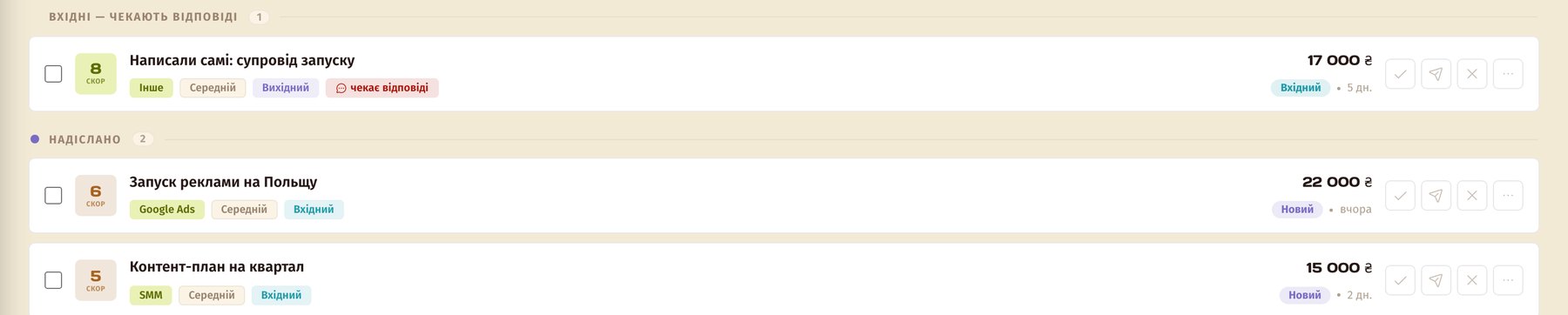
Inside the card, those same two exits are the stages, with a counter of days without movement next to them.
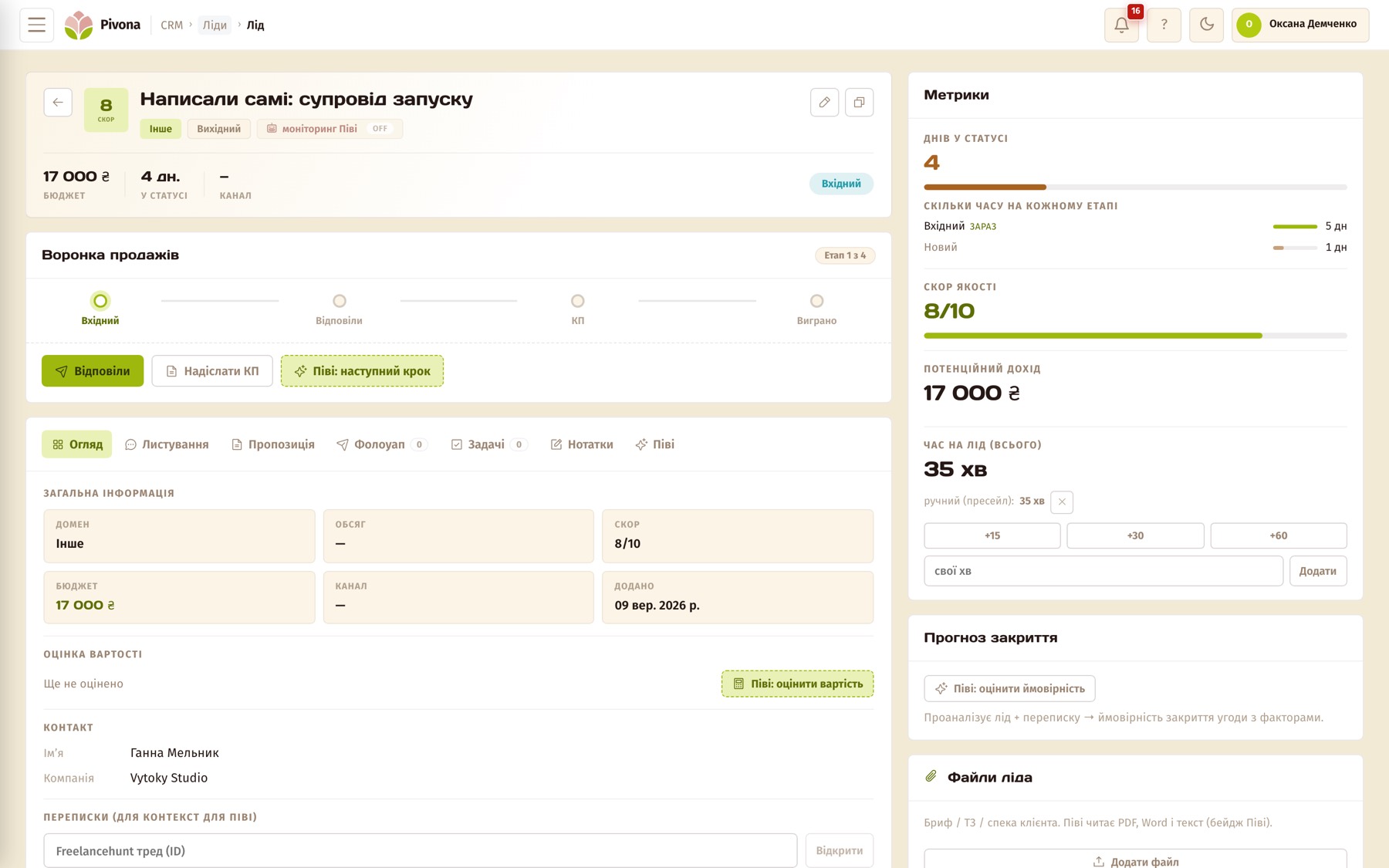
That’s a number I now see straight away — I used to work it out retroactively over six months, the way I did for this article.
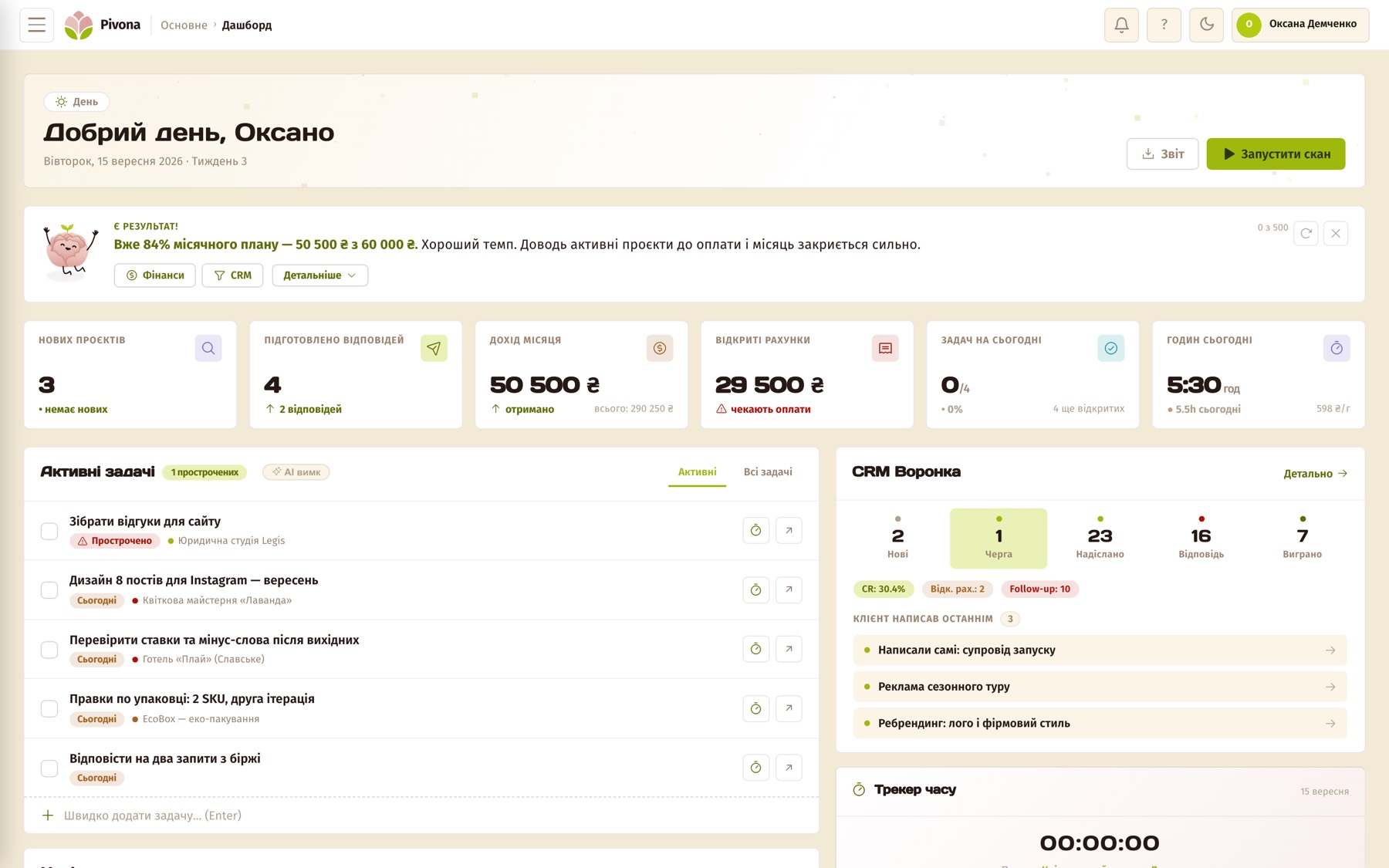
The first 30 days in Pivona are free, no card required: pivona.io/pro-pivona. After that it’s ₴1,290 a month, or a free mode for three active clients.