Freelancers find clients outside marketplaces through four channels: Google Maps, Instagram via Google search, referrals from existing clients, and professional communities. The shared principle is observation: you spot a specific problem in a specific business and write with a reason, not with a template.
Why marketplaces aren’t enough
Freelancehunt, Kabanchik, Upwork — these are auctions: several freelancers competing for the same task, price pushed down.
While you’re waiting for a reply to a bid, businesses around you already have a problem you know how to fix. They don’t post the job on a marketplace — they don’t even know they need a freelancer.
The difference: on a marketplace, competition is visible — you can see how many people applied. Outside a marketplace there’s less competition, and you’re often the first person to write with a specific proposal.
What a “reason message” is
A reason message is a cold outreach message that opens with a specific observation about the recipient’s business, not a description of your services. The difference from a template: it’s about them, not about you.
A cold message like “Hi, I’m a freelancer, I offer my services” is spam. Not because the writing is bad, but because it’s the same for everyone.
The conversion rate on cold messages is a handful of replies out of a hundred. That’s normal.
The difference from a template message isn’t in the number of replies — it’s that a reason message doesn’t damage your reputation.
Method 1. Google Maps
Open the map, type in your niche and city: “dentist Lviv”, “auto repair Kharkiv”, “beauty salon Odesa”.
What to look at:
- Number of reviews. 100+ reviews = the business is active and has customers.
- Whether there’s a website. If the listing has no link, or it leads to a page last touched in 2019 — that’s your reason.
- Photos. If the photos look like they were shot on a phone in 2015 — that’s a reason too.
Reason message:
“I saw you on Maps — 130 reviews, 4.8 rating, and no website. I have an idea for fixing that — I can show you in 10 minutes.”
This isn’t a template. The numbers 130 and 4.8 are specific, pulled from this exact business’s listing. The person can see you were looking at them specifically.
Google Maps works best for local businesses — the ones tied to a physical location.
Method 2. Instagram via Google
Search Google: site:instagram.com "niche" "city".
For example: site:instagram.com "confectioner" "Kyiv".
Google will surface Instagram accounts of businesses in that niche. From there, the same principle applies: look at the profile and find a specific observation.
What can serve as a reason:
- The link in bio leads to a dead page
- 2,000 followers, but the last post was three months ago
- They’re running ads, but the landing page is a single page with no form
Write in Direct. First sentence: what you saw. Second sentence: what you’re offering. That’s it.
Be careful with mass DMs: Instagram limits how many messages you can send to strangers and can temporarily block your account. Write selectively, not in bulk.
Method 3. Referrals from existing clients
The shortest path to a new client is through someone who already works with you.
But “recommend me” doesn’t work. It’s too abstract — the person doesn’t know exactly who to point you toward.
What works: a specific question.
“Do you know anyone who runs their own ads and isn’t happy with the results?”
“Has anyone among your partners complained that their website isn’t bringing in clients?”
One specific question instead of “recommend me” — and the person either thinks of someone right away, or they don’t. But they won’t forget it, because the question is tied to a real situation.
Method 4. Professional communities and chats
Telegram chats, Facebook groups, DOU, niche forums — places where business owners and freelancers discuss work.
One rule: answer first, pitch later.
Someone writes: “Does anyone know how to set up conversions in GA4?” You answer substantively. Not advertising — helping. If the answer is useful, the person will check out your profile on their own.
This is the slowest method. But it builds a reputation that works without you.
What to do with the ones you find
Finding a lead is half the job. The other half is not losing them.
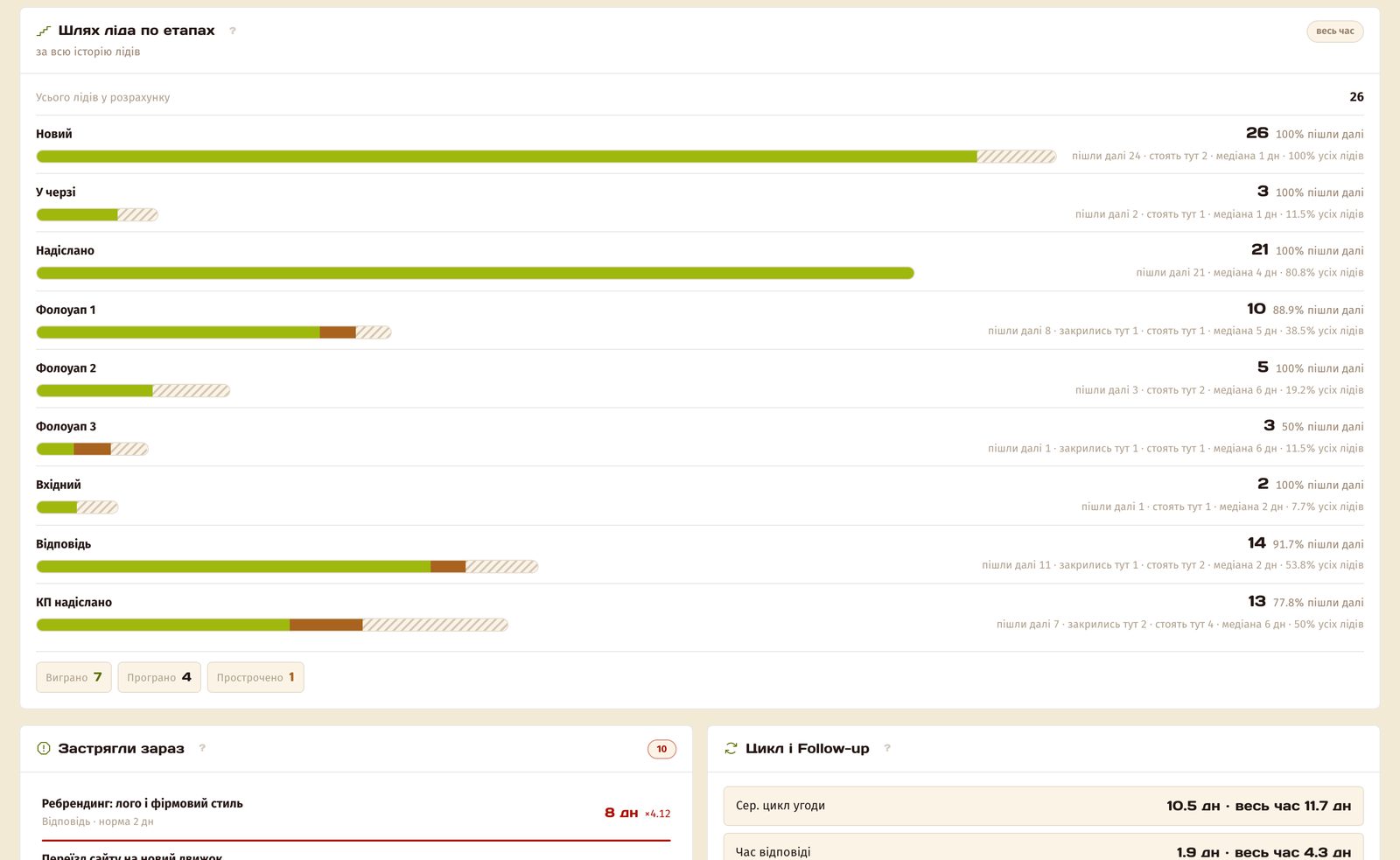
Write it down right away: name, where you found them, what you noticed, when you messaged, when to follow up.
I didn’t reply to 468 inquiries over six months — their stated budgets added up to 8.2 million hryvnias. That doesn’t mean I lost 8 million — some were irrelevant or had unrealistic expectations. But the scale surprised me when I finally saw the number.
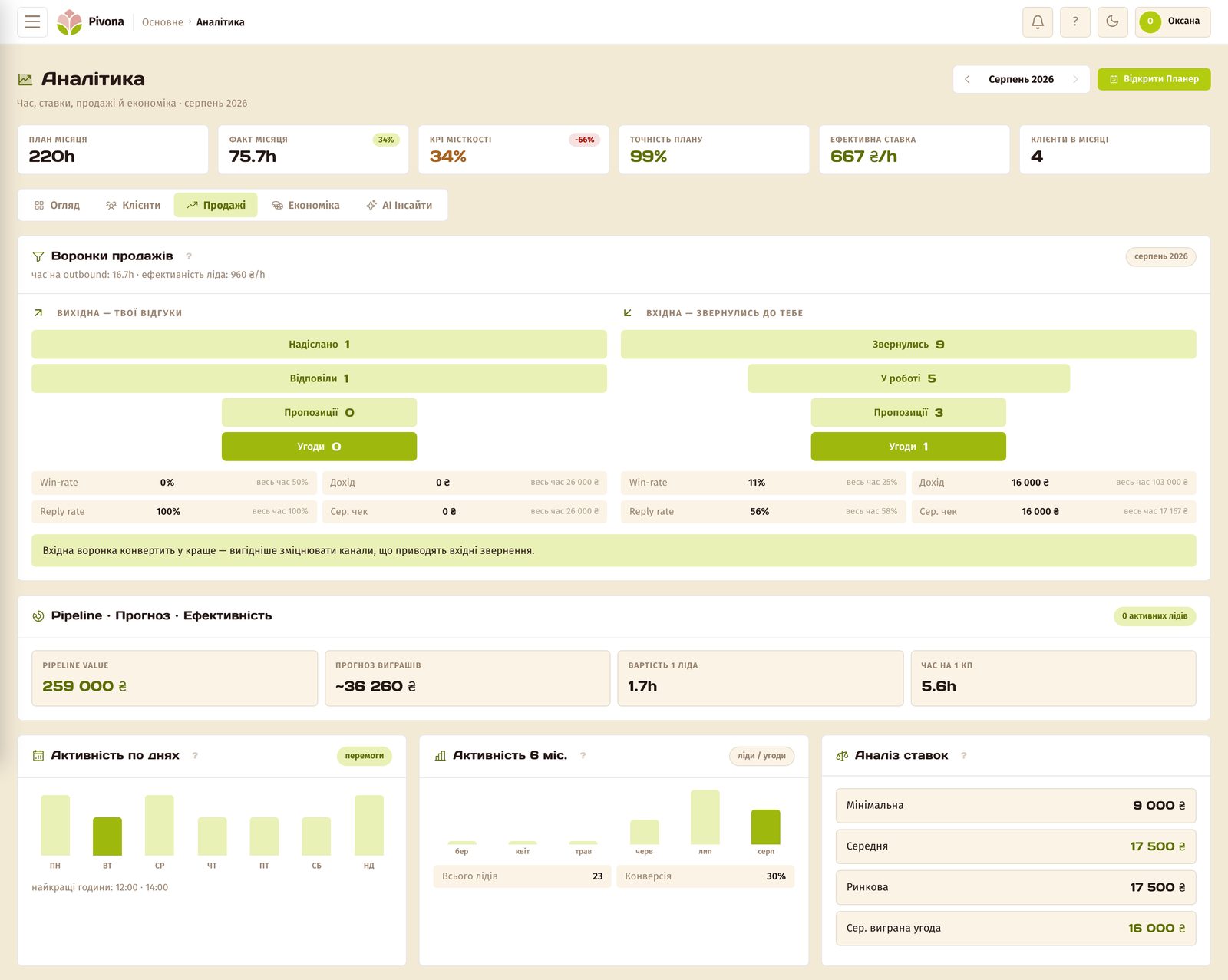
A notebook, a spreadsheet, Notion — anything where every lead lives in one place.
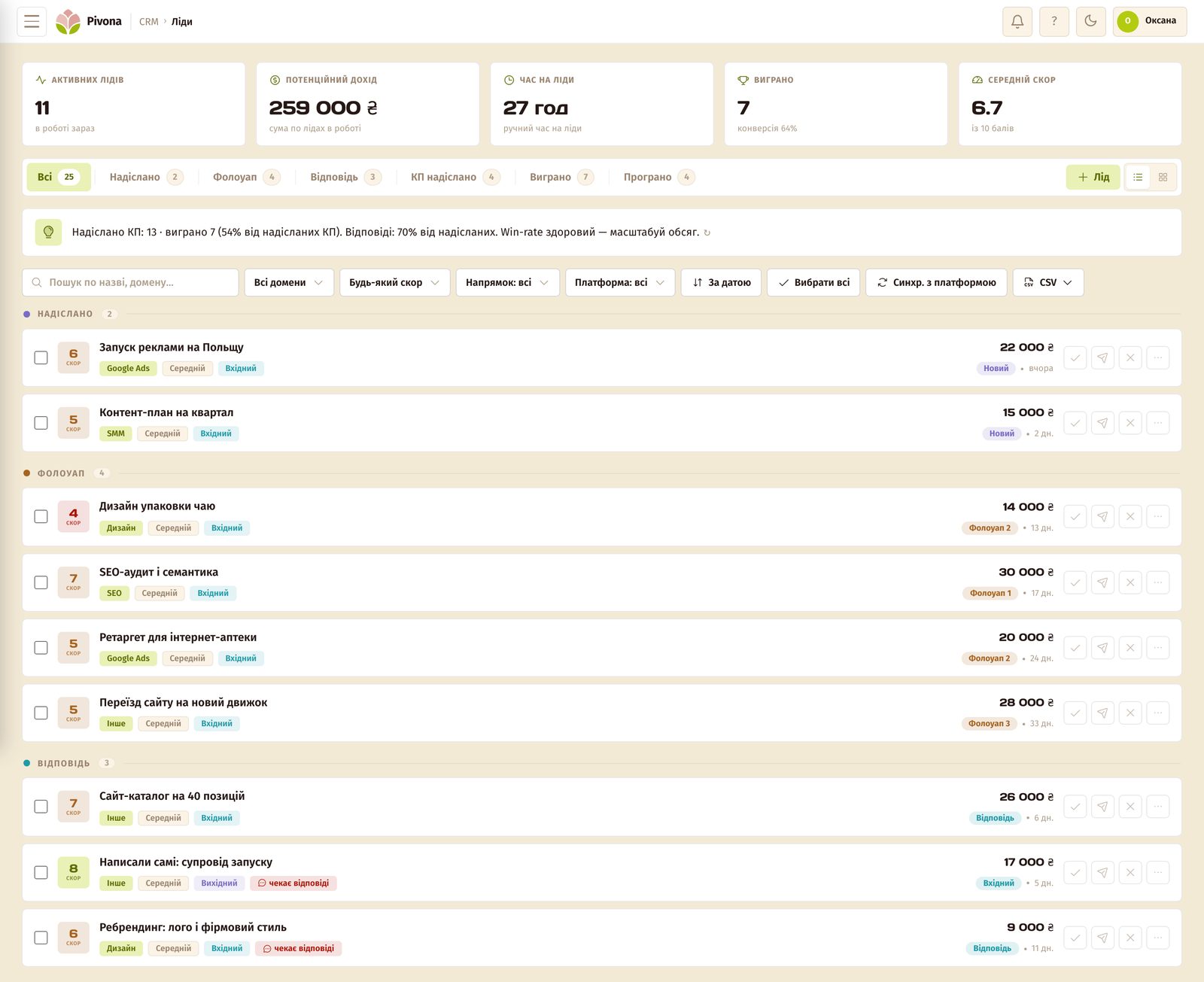
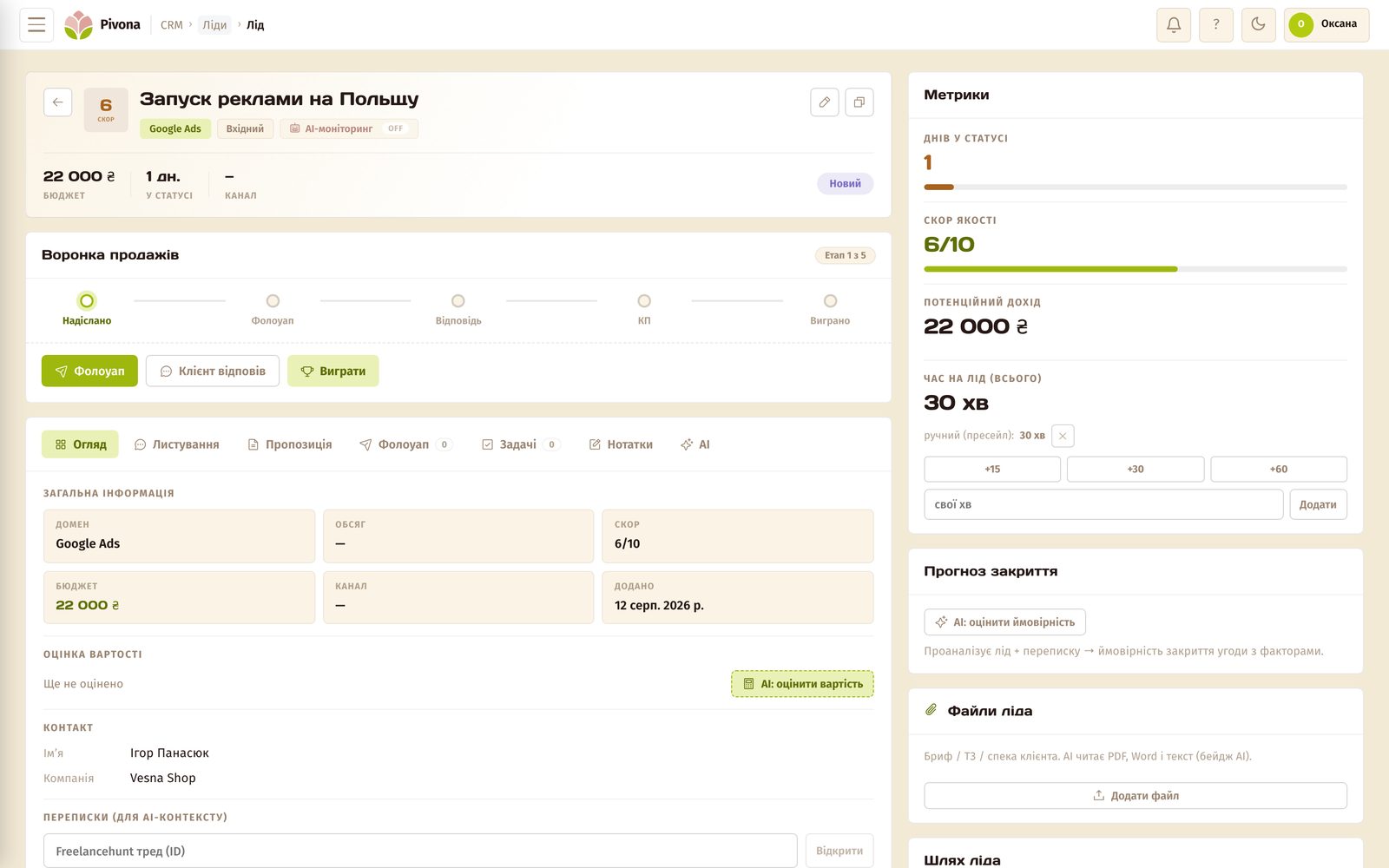
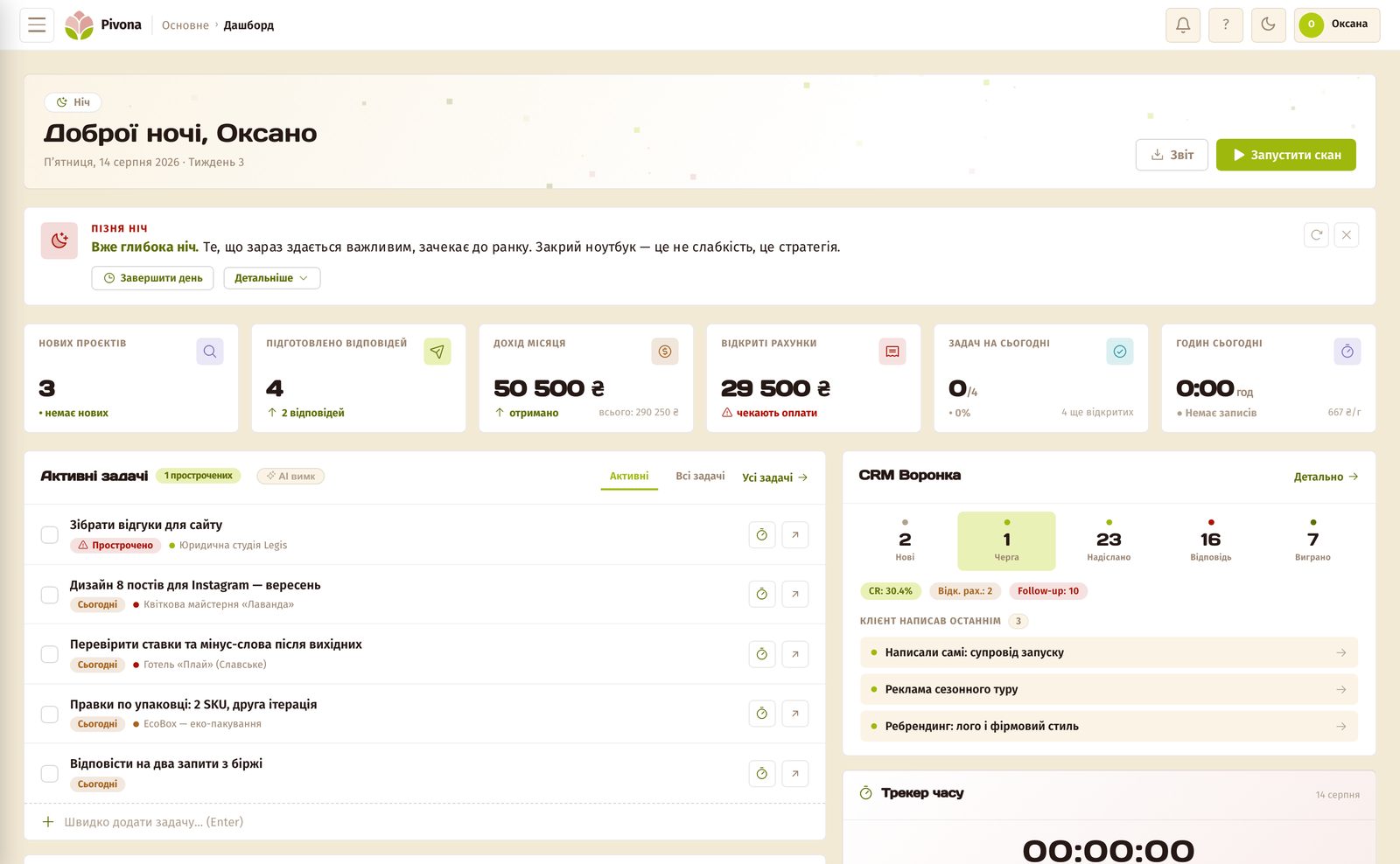
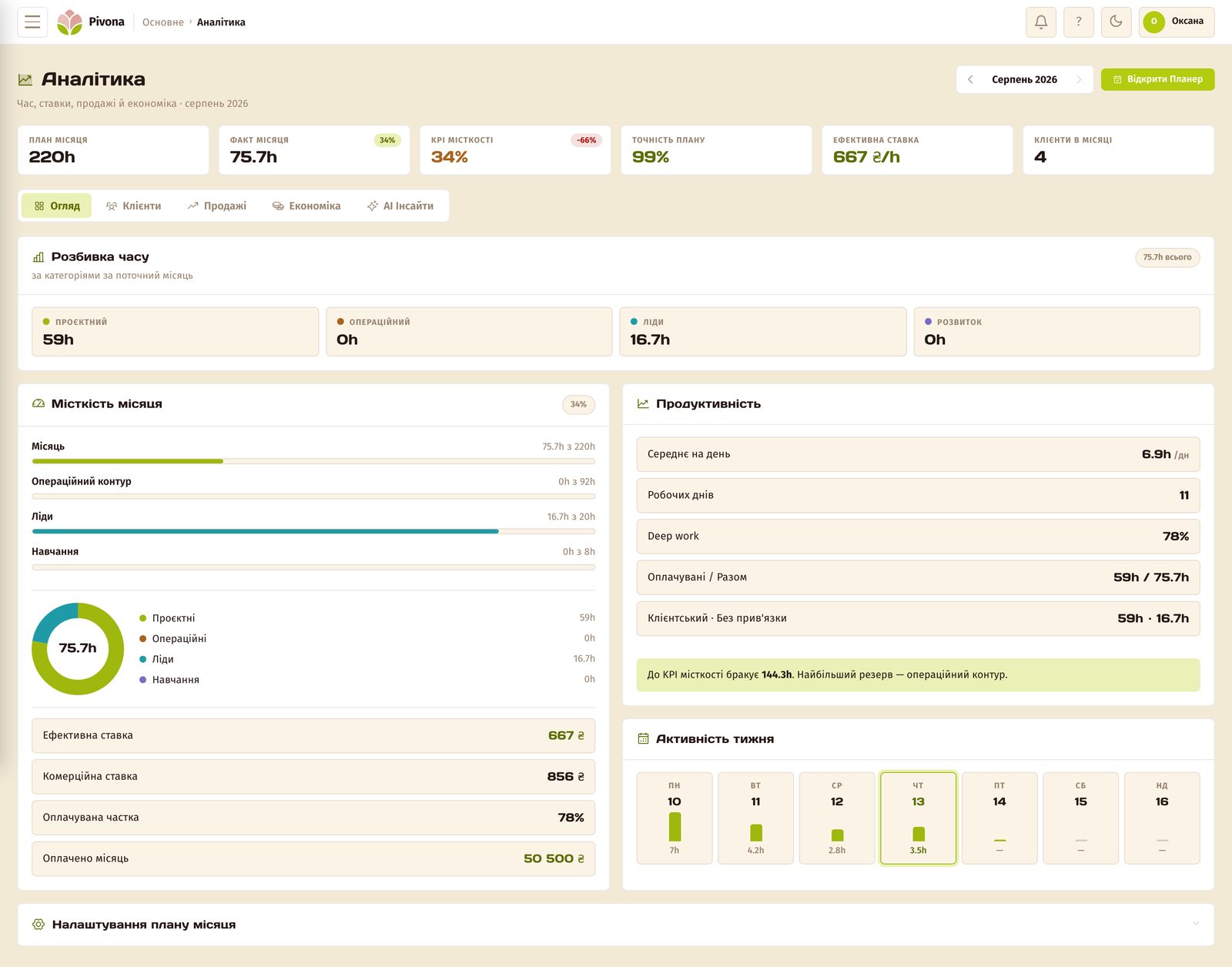
In Pivona this is automated: the client-search module finds businesses via Google Maps and SERP, drafts a reason, and creates a lead in the CRM. The module is available on the Pivona plan (₴1290/month) — 300 searches a month; the free plan gets 3 searches to try, the trial gets 30. The first 10–20 results need a manual review. But the approach itself works by hand too — that’s exactly what this article is about.
What to do right now
Open Google Maps. Type in your niche and city. Find three businesses without a website. Send each one a single message about what you noticed. That’s 30 minutes.