
A freelancer’s real income = turnover minus expenses minus taxes, divided by actual working hours — including revisions, correspondence and downtime. Most people only count the first number.
My numbers over 7 years
545 payments. 92 clients. Seven years — from 2020 to August 2026.
I don’t publish the absolute figures for my turnover: in this article they add nothing, and the formula works the same at any scale. So — the trend.
| Year | Payments | Change in income vs. previous year |
|---|---|---|
| 2020 | 37 | start |
| 2021 | 71 | ×6.1 |
| 2022 | 118 | ×2.4 |
| 2023 | 121 | ×1.5 |
| 2024 | 61 | −33% |
| 2025 | 66 | ×2.6 |
| 2026 (8 mo.) | 71 | ×2.2 |
This is nominal change — not adjusted for inflation.
My own curve isn’t typical. I’m showing it not as an example to follow, but as material for the formula.
2024 was a collapse. Half as many payments as the year before. And in 2026, with roughly the same number of payments (71 vs. 61), income is 5.8 times higher. That’s not “worked more” — it’s different invoices.
The table looks like a success story. But that’s turnover — not income.
The formula: what’s left
Net income = turnover − expenses − taxes
If the number turns out low, that’s not a verdict on you. It’s an assessment of a price you can change.
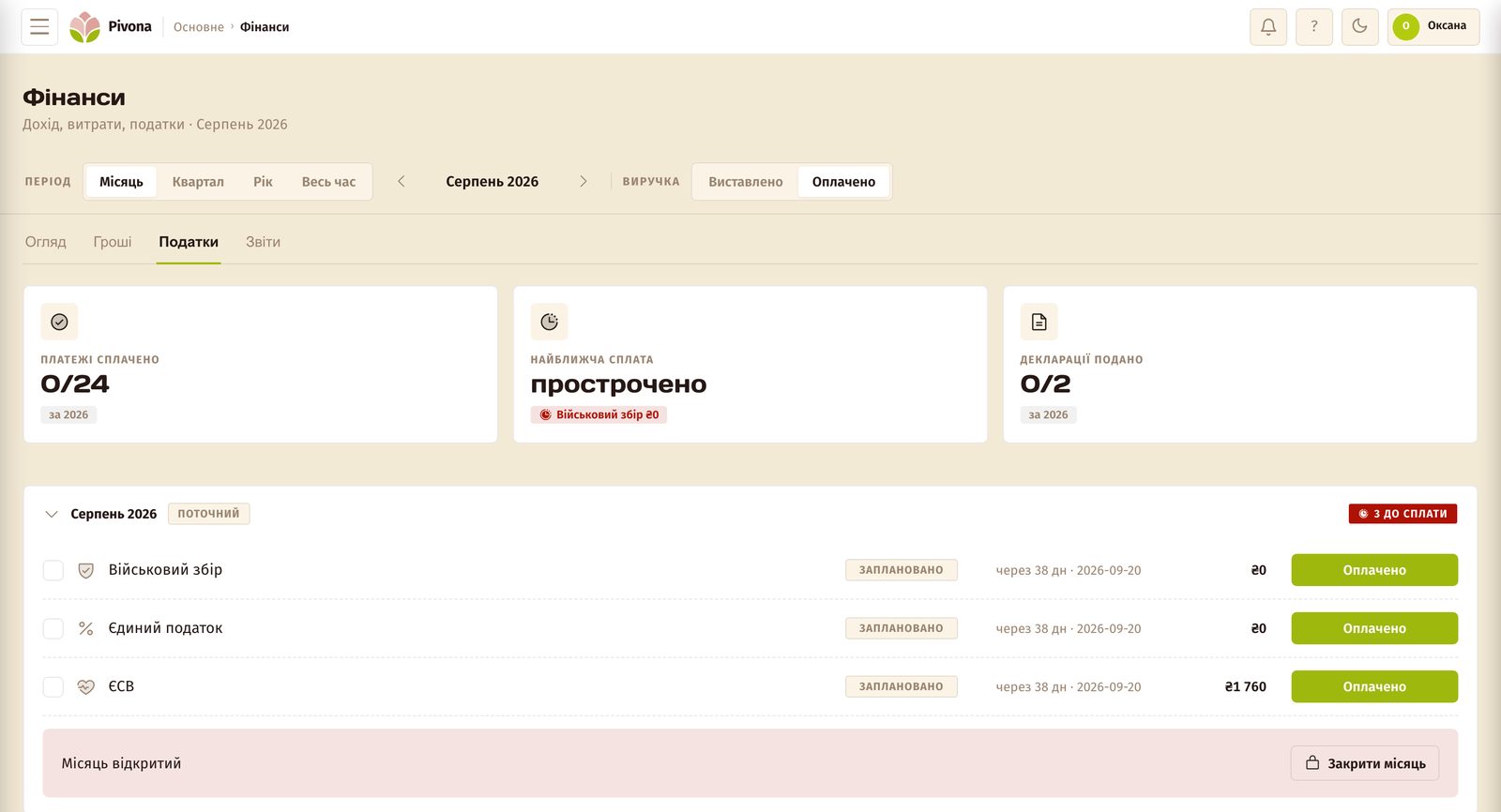
Taxes (sole proprietor, Group 3, 2026)
- Single tax: 5% of turnover.
- Military levy: 1% of turnover.
- Unified Social Contribution (ЄСВ): 1,902.34 UAH/month — fixed, regardless of income.
The first two are a percentage, the third is a constant. So the real tax burden depends on turnover: the smaller it is, the bigger the share the Unified Social Contribution eats up.
Over my turnover for the first 8 months of 2026, all three payments together came to 7.4% of turnover. At half that turnover, it would come to around 9%; at a quarter of it, almost 12%.
Expenses
I only started tracking expenses in February 2026. Over seven months they came to 11.5% of turnover — here’s how it broke down.
| Category | Share of expenses |
|---|---|
| AI tools | 65% |
| Software | 8% |
| Other | 7% |
| Education | 4% |
| Website | 4% |
| Equipment | 3% |
| CRM | 2% |
| Analytics | 2% |
Two-thirds of expenses are AI. A year ago this line didn’t exist.
Summary for 2026
100% of turnover − 11.5% expenses − 7.4% taxes = roughly 81% net (expenses are tracked from February — January isn’t included).
For previous years, I can’t honestly calculate net income — I didn’t track expenses. I know the turnover; the rest is guesswork. I won’t present guesswork as fact.
Calculate it now

- Open your bank statement for the last 3 months.
- Add up the payments received from clients — that’s your turnover.
- Multiply by 0.06 — that’s the single tax plus the military levy combined. Add 1,902.34 × 3 = 5,707 — that’s the Unified Social Contribution for the quarter.
- Subtract your monthly subscriptions (software, AI, hosting) for the same 3 months.
- What’s left is your net income for the quarter.
Hourly rate — an honest problem
Hourly rate = net income ÷ all working hours.
“All” doesn’t just mean hours spent on the task itself:
- revisions
- calls
- correspondence
- waiting for a reply
- looking things up
- admin
If you only track “the work,” you’re dividing by half the real number and getting a rate that’s twice as high as it should be.
I have a time tracker. 291 entries, 177.5 hours since March 2026.
177.5 hours over 5.5 months is 8 hours a week. Clearly, not all the work got tracked.
If you divide income by these hours, you get a four-figure hourly rate. A beautiful number. And a false one, because the denominator is incomplete.
The formula is correct. The denominator isn’t.
How to calculate it honestly
Take one project where you know exactly how many hours you spent. One.
- Payment received for the project.
- Minus direct expenses (software for this project, paid tools).
- Minus taxes (for a Group 3 sole proprietor: amount × 0.05 + a proportional share of the Unified Social Contribution).
- Divide by all hours — from the first email to the last revision.
That’s your effective rate for this client.
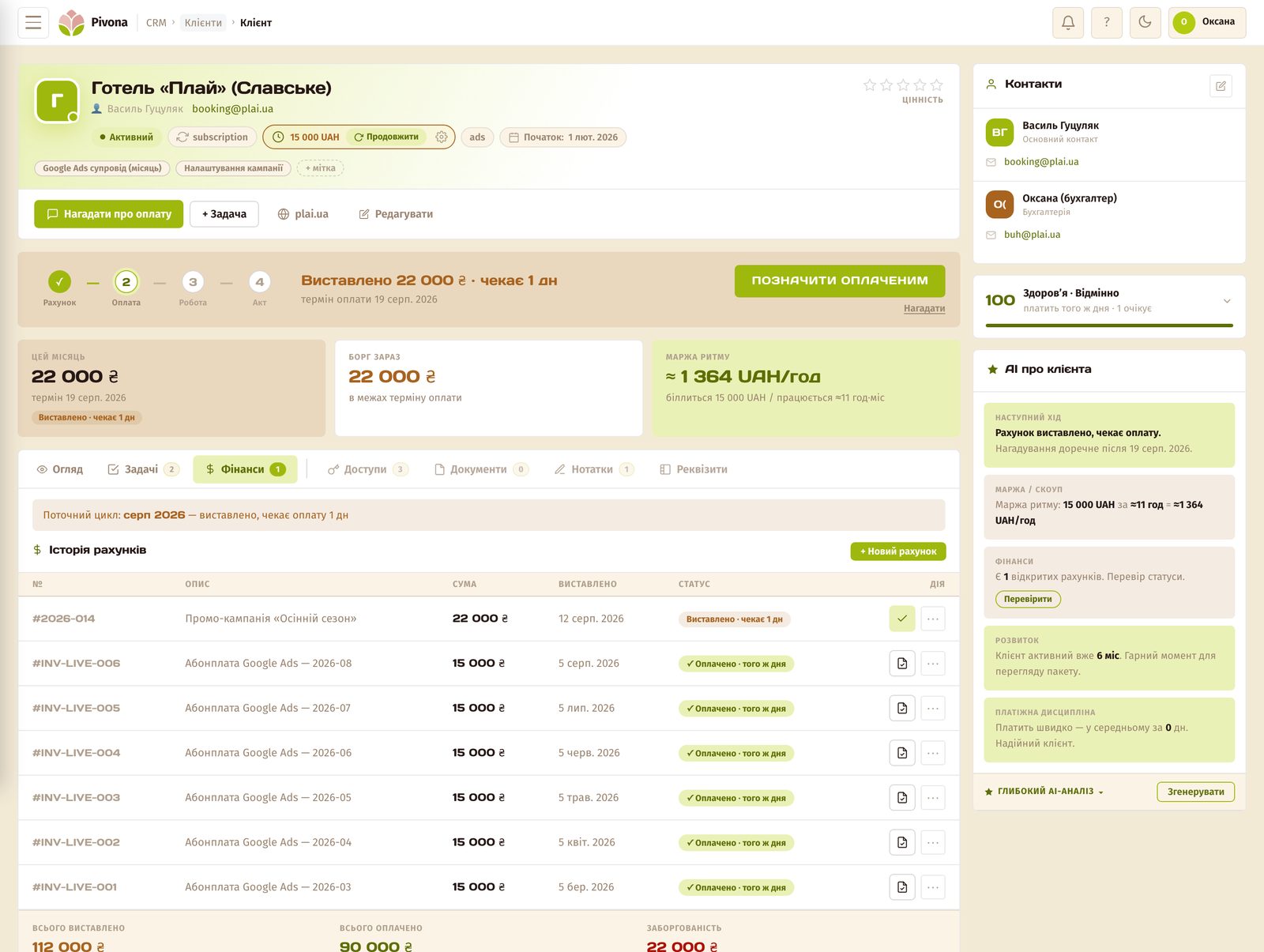
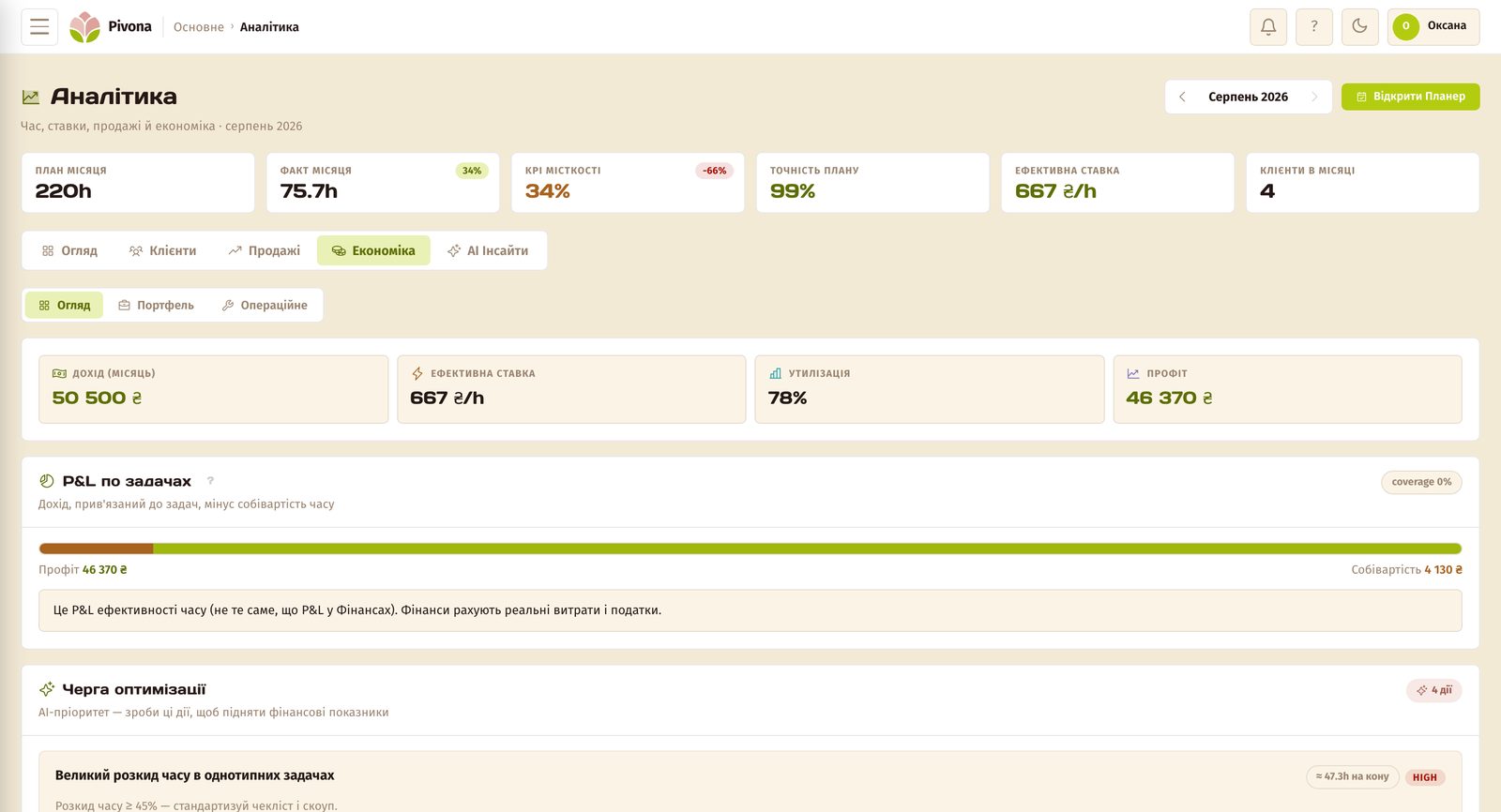
I started calculating this constantly once I put together the first version of Pivona for myself.
What to calculate if you have fewer than three clients
If you can see every payment on your phone screen, a three-column table is enough: date, amount, client. Don’t overcomplicate it.
It’s worth calculating when you have four or more clients, or when money comes in from different sources and you’re not sure how much is left after taxes.
The most important thing I saw in my own numbers
61 payments in 2024. 71 payments in 2026. The difference in count is minimal. Income differs by 5.8 times.
The difference is, at minimum, in who you work with and at what price. Whether the volume of work changed — I don’t know, because I didn’t track hours for 2024.
Calculating this takes 10 minutes. Not calculating it means another year working at the old rate without knowing it.